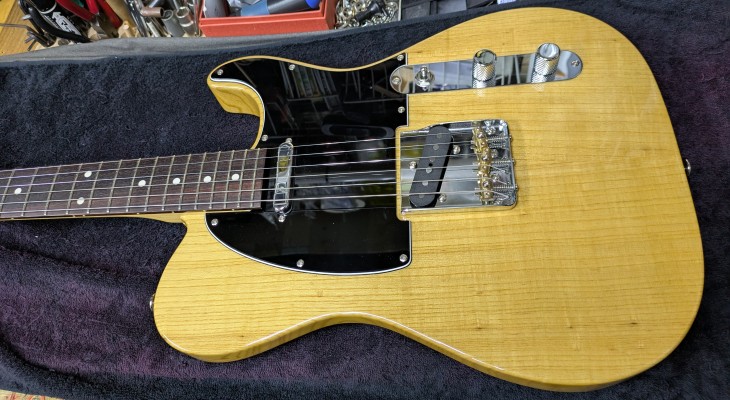
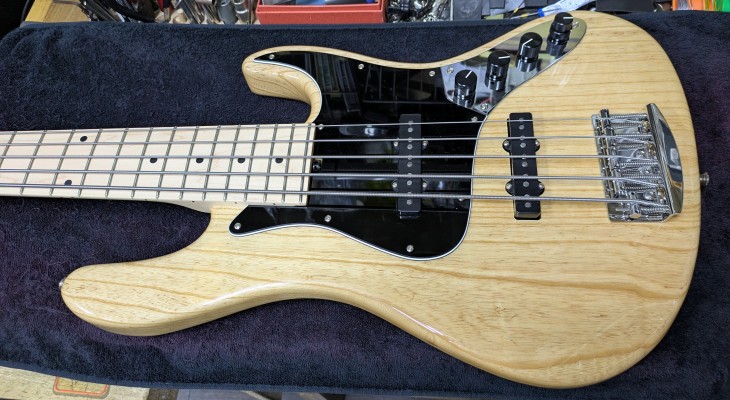
I understand you purchased this secondhand, but it’s in great condition.
When I tried it out, it felt almost exactly like a Sadowsky bass.
The parts seem to be the same as those on a Sadowsky, and I get the impression that both the playability and the sound are similar.
Price-wise, it seems to be in the same range, and since overseas brands tend to keep getting more expensive, I think this makes for a great option as an equivalent, compatible model that you can buy for less than a Sadowsky.
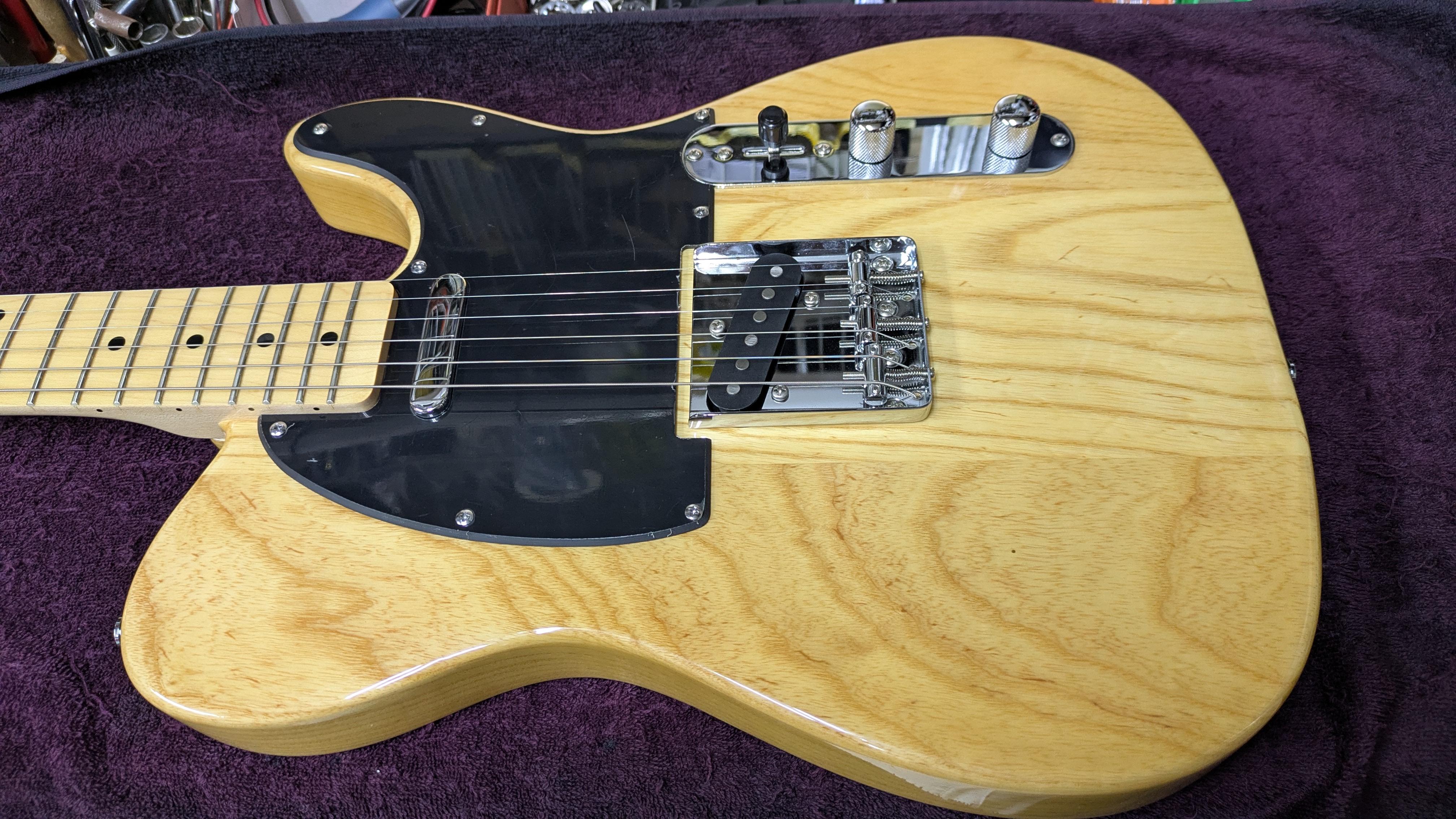
This is a guide to replacing the tension pins on the experimental Telecaster featured on YouTube.
The fact that “parallel-headstock guitars require a tension pin for the 3rd string” still hasn’t caught on at all among the general public.
As a result, there’s significant variation in tone, and chords sound bad.
Furthermore, the pressure on the 3rd string’s nut becomes extremely weak, so the open string doesn’t ring out fully—which only exacerbates the differences in tone between the strings.
To avoid this, a tension pin is needed for the 3rd string, but since most manufacturers lack technical expertise, very few have attempted to fix this issue.
Fender started installing tension pins on the 3rd and 4th strings in the 1980s, but it’s a mystery why they stopped doing so.
While a tension pin isn’t necessary for the 4th string, it is essential for the 3rd string.
In recent years, tension pins compatible with strings 1 through 3 have become available, and simply using these can significantly improve the sound.
The sound of the 3rd string becomes tighter and more resonant.
Simply put, the pressure on the nut—which the 3rd string previously lacked—increases, allowing the string to ring out fully and balance the tone with the other strings.
In particular, while the adjacent 1st and 2nd strings come with tension pins as standard and resonate fully, the 3rd string not only fails to resonate fully but also stands out negatively because it’s louder (due to improperly adjusted pole piece heights).
Since this issue with the 3rd string is completely eliminated, please replace your tension pins immediately with ones that work for the 3rd string as well.
They cost only about 1,200 yen, and this alone will improve the sound.
The tone will match that of the 1st and 2nd strings, and your chords will sound better.
You can see in the video how tension pins change the sound, but to be precise, what’s important is “applying the proper string tension to the nut.”
Please understand that this nut (contact pressure) is a major factor affecting the sound.
This also explains why the sound on Jaguar and Jazzmaster models can be poor; since the string tension on the bridge saddles is too weak, the strings don’t resonate fully, making a buzz-stop bar essential.
Remember that this contact pressure is essential for both the nut and the bridge; if it’s insufficient, the strings won’t resonate properly, leading to poor sound quality.
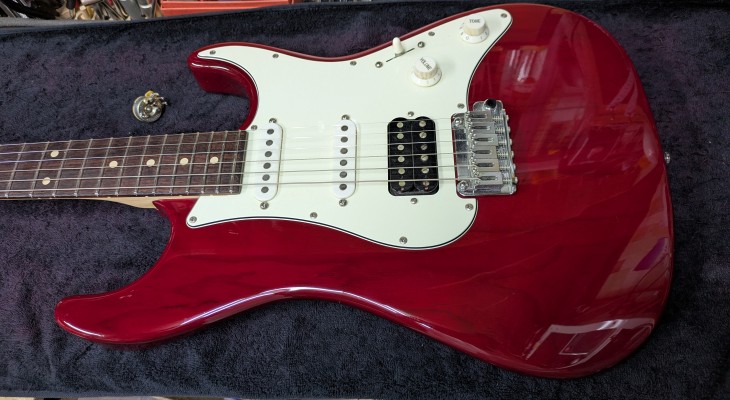
This is a pot replacement and setup for a S-brand Modern guitar.
The pots were producing a scratchy sound and had stopped working properly.
The neck was also bowing forward, resulting in high string action.
The truss rod didn’t seem to have much play left; while I was able to make the adjustment, the guitar likely won’t last long unless the strings are properly loosened when in storage.
Pots are consumable parts, so if you don’t replace them as soon as you hear that scratchy sound, they’ll eventually stop working altogether—which could lead to major issues when you need the guitar most, so please be careful.
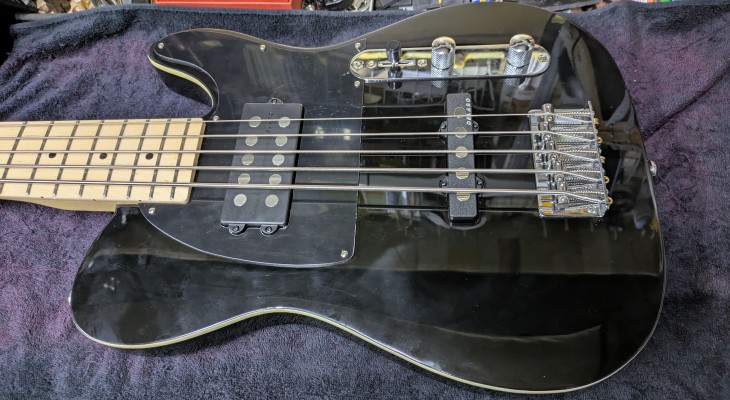
This is a pickup replacement and setup for a bass ordered and purchased on AliExpress.
We’re replacing the pickups with Delano pickups provided by the customer.
The front pickup fit right in, but it appears the routing is misaligned.
Additionally, since the pole piece spacing differs significantly from the original, the string positions and the Delano pickup are quite different.
The rear pickup is also misaligned from the centerline and doesn’t quite fit in size, so it won’t fit into the cutout as is.
Furthermore, the string spacing on the installed bridge is quite narrow at 16; given the width of the fingerboard, I think a bridge with a string spacing of around 18 would likely work just fine.
Although the pole pieces on the front pickup are significantly offset from the strings, I was surprised to find that each string was picked up without any issues when I actually played it.
The rear pickup’s mounting position was catching on my ear, so I had to shave down the body cutout slightly.
With the Delano rear pickup, even a slight misalignment reduces the volume, but I was able to balance the volume by raising the side near the 1st string significantly.
If the pickup is mounted too low, the rear pickup won’t pick up the sound properly, resulting in a large difference in volume between the strings.
The result was a rich, mellow sound—proof of just how good the Delano pickups are.
Also, the nut that came with it is in poor condition—the nut height is extremely high, the grooves are poorly cut, and there are large gaps.
On top of that, it’s made of a soft material, so when the strings are tensioned, the nut twists and looks like it’s about to crack at any moment.
This definitely calls for a nut replacement.
While I’m at it, it would probably be best to replace the bridge with one that has wider string spacing.
Other than that, there don’t seem to be any particular issues.
Even though AliExpress sells items you can order for rock-bottom prices, I think there’s a significant hit-or-miss factor.
It might be fine if you’re willing to spend money to fix these kinds of issues, but it’s certainly true that the low price is still appealing.
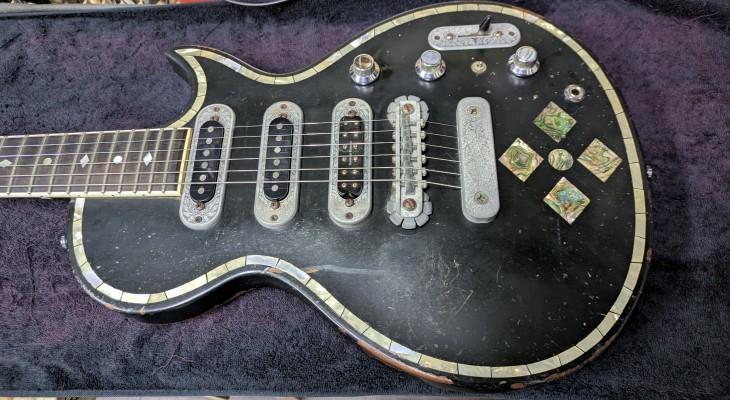
This is a rewiring and setup job for a Zemaitis A22SU.
This time, the request was to install an EMG “RPC” treble booster.
The guitar currently has a tone cut circuit, and we’ll be adding the EMG RPC to that setup.
This is installed much like a built-in effects pedal; you simply connect the potentiometer with the circuit board to the hot wiring.
Please note that a battery is required to power this RPC, so you’ll need to ensure there’s enough space in the routing.
Since it produces a sound similar to a treble booster, I think this is a great component for guitars that lack high frequencies or tend to sound muddy.
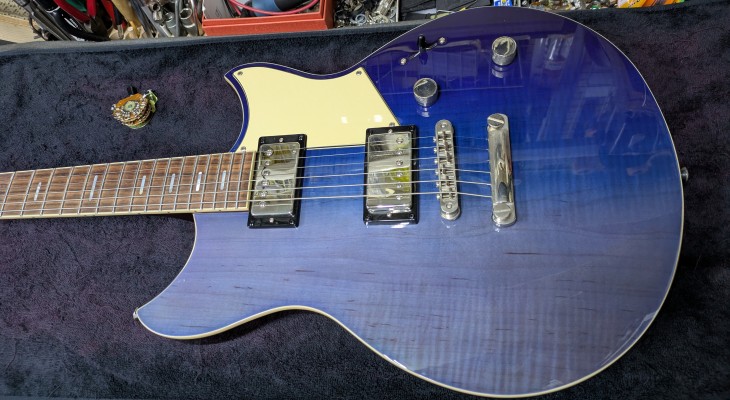
This is a selector switch replacement for a Yamaha RSP20.
The selector switch was making a scratchy noise, so I replaced it.
Although this model is equipped with a Super Switch, one side of it is not in use.
Please note that this model requires a selector switch with 5 contacts × 2, so a standard 5-way switch cannot be used as a replacement.
The interior features a coil similar to a power transformer and a circuit similar to a booster switch.
It also includes a feature called the “Focus Switch.”
In terms of sound, the original clean tone is excellent, and the Focus Switch allows you to produce modern-style high-gain tones as well.
It’s a guitar that incorporates a built-in effects unit (booster) without requiring batteries.
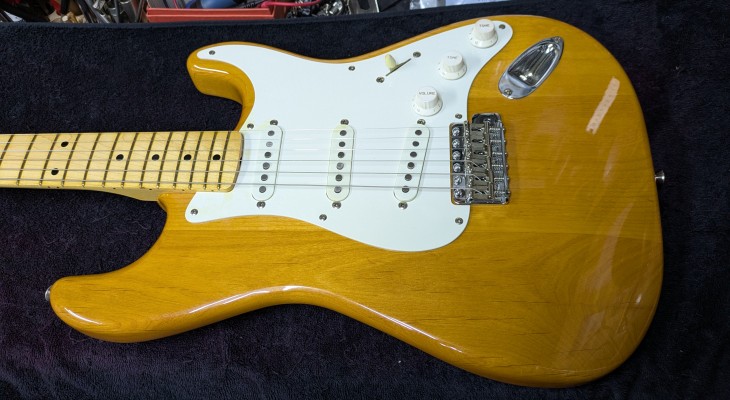
This is a pickup and pot replacement and setup for a Tokai Stratocaster.
We replaced the pickups with three pots provided by the customer and Luzier pickups.
These are pickups that people have been buying lately after realizing how good they are.
Although they’re vintage-style pickups with lower output, they have excellent projection and a clean chord tone; the bridge pickup has slightly higher output, resulting in a well-balanced overall sound.
I think this is the ideal sound for a Stratocaster.
It’s surprisingly rare to find a pickup that delivers such a well-balanced sound from the neck to the bridge, so ArqueNote pickups really deserve to be more widely available.