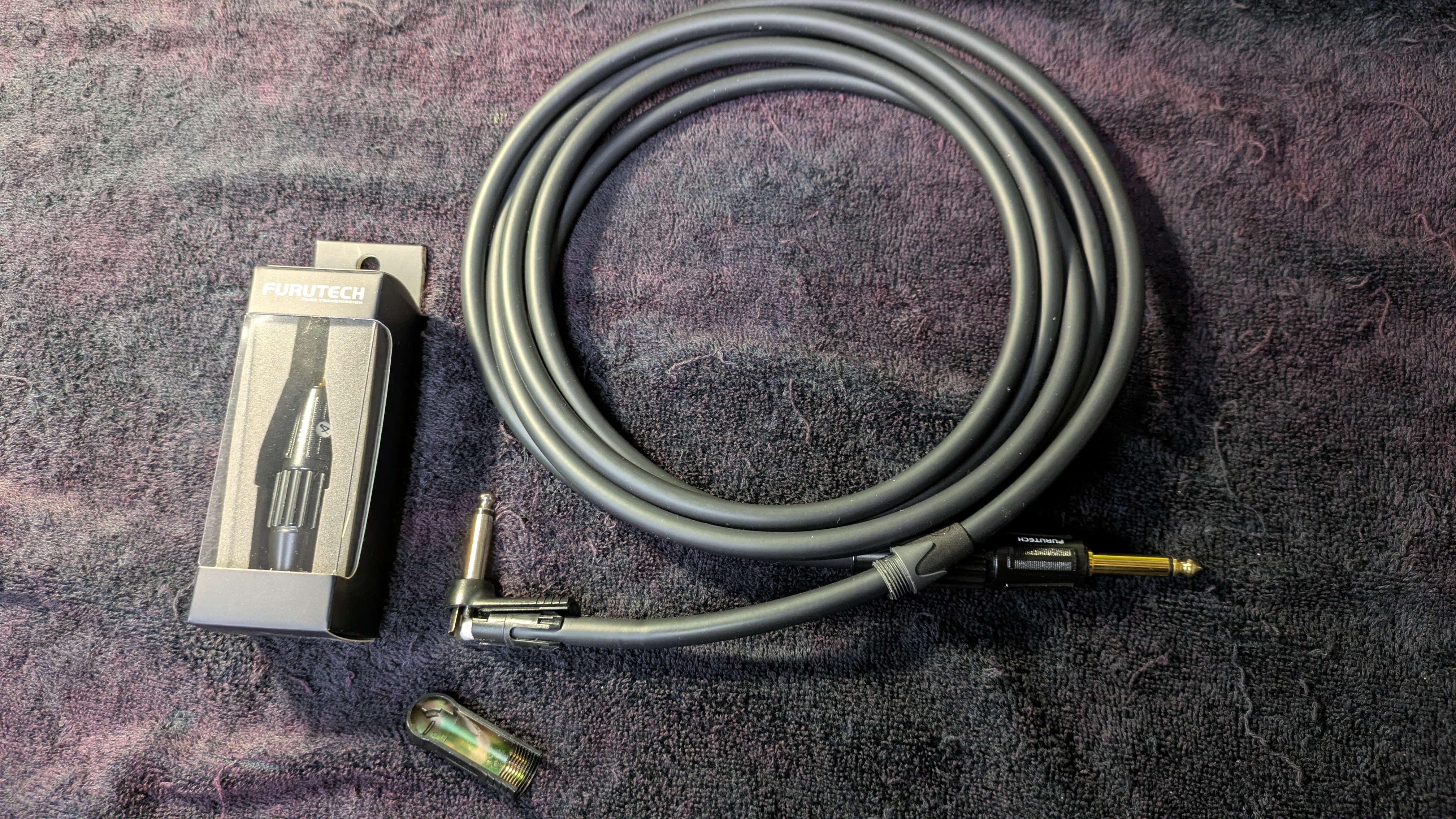
The replacement plug is the FURUTECH FP-703, which I also recommend.
I feel L-shaped plugs are inferior to straight plugs in terms of sound quality, so I generally recommend using straight plugs unless an L-shape is absolutely necessary for your setup.
After the replacement, the sound became cleaner with no more harshness or sluggishness, and the frequency balance improved significantly.
While just changing the plug can affect the sound, soldering itself also alters the sound, so I don’t recommend doing the wiring yourself.
Even if you get sound out of it, it’s often not sound that’s been properly optimized.
I think many people are looking forward to this terrific project.
As introduced on Youtube in the past, we have found that the sound improves when a modified outlet with the Kurumira effect is used, and we were able to connect with Mr. Ouchi, the developer, through the transmission of that video, which led to this experiment.
As an experimental project this time, we asked ourselves, “Can we make parts that improve the sound by processing Kurumira? This time, we experimented with guitar shield cable plugs, power cable plugs (with grounding), and earphone plugs (for audio applications) under the concept of “Can Kurumira processing be used to make parts that improve sound?
This time, we used Furutech’s FP-703 with Kurumira processing to see how it would affect the sound. The Kurumira process is used for plugs, cases, and earphone plugs (for audio applications).
Kurumira processing was applied to the plug, case, and all parts. Since the case and fixture are also Kurumilla-processed, the Kurumilla effect is added to the entire plug.
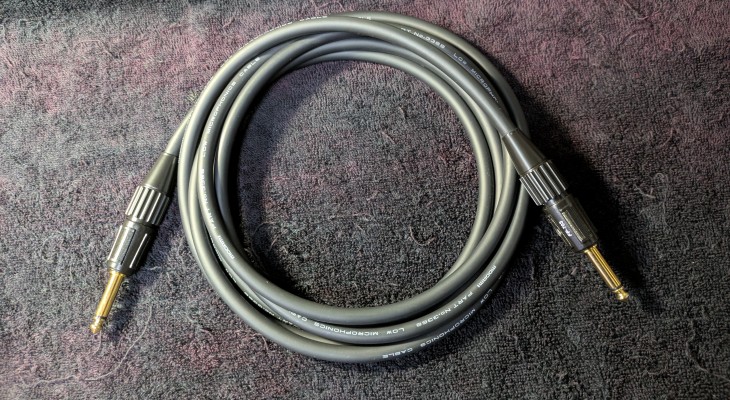
We tested the same length of Mogami 2497, which is used for all cables in our workshop, with different plugs.
One of the 2497 cables was used for a long time, but it is difficult to imagine any significant wear and tear on the 2497 cable when used indoors, so we do not believe that there is a significant difference in wear and tear.
As you can see in the Youtube movie, it is amazing that the sound quality can be changed so much only by the plugs.
In terms of sound quality, the sound has a beautifully balanced feeling as if a compressor is applied, and the chords are beautifully arranged, and the sound is easy to understand without any tininess.
However, in the case of a clean sound, it can be said that “a tinny and inaudible sound is like a musical instrument,” so there will be a difference in taste.
Especially, single notes have a texture similar to the grain of a vintage instrument.
When used in a distorted state, the effect of making the sound sound sound clean becomes especially large, and the sound is output without being crushed.
The Kurmilla effect strengthens the original signal, making it harder to distort the sound, but it also makes it easier to control the sound.
This will give you more options for effects, and you will be able to add more equipment more easily.
Although this experiment is not in a state where it can be said to be 100% good, if it can be changed so much with only two plugs, we can have high expectations for future experiments.
Although the effect is weak compared to the modified outlet, it is useful when you don’t want to change the sound too much.
In addition, because I think that the Kurumira effect is also weak with only two plugs, I think that the loss is prevented by relaying the parts to which the Kurumira effect is added on the way because the signal becomes dirty and collapses as usual if there are more devices to be connected.
I think that the number of plugs will also change the sound, so I think that plugs with the Kurumilla effect will be very effective in environments with many devices, digital devices such as multi-effectors, and deep distortion.