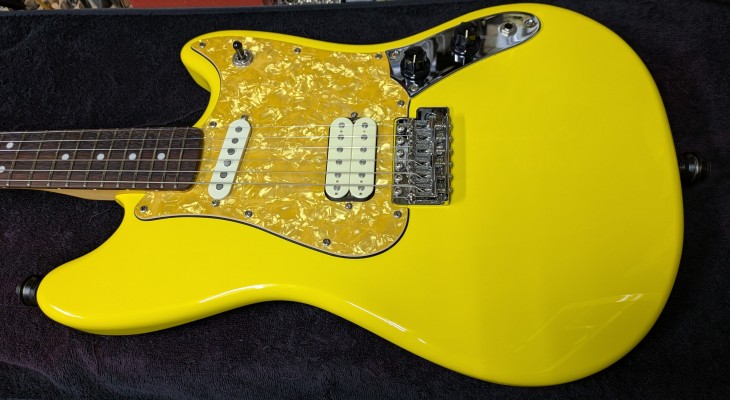
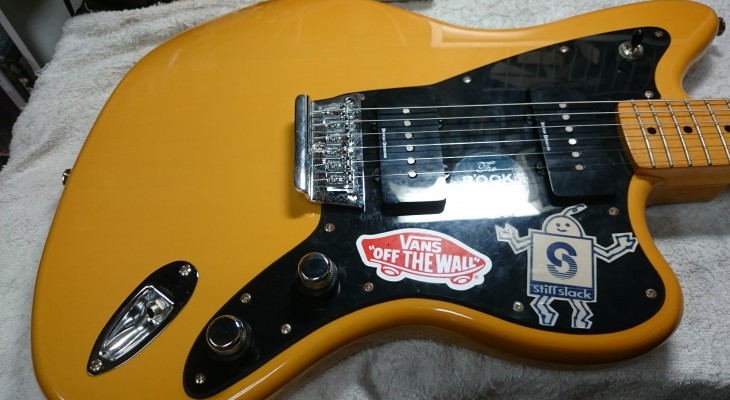
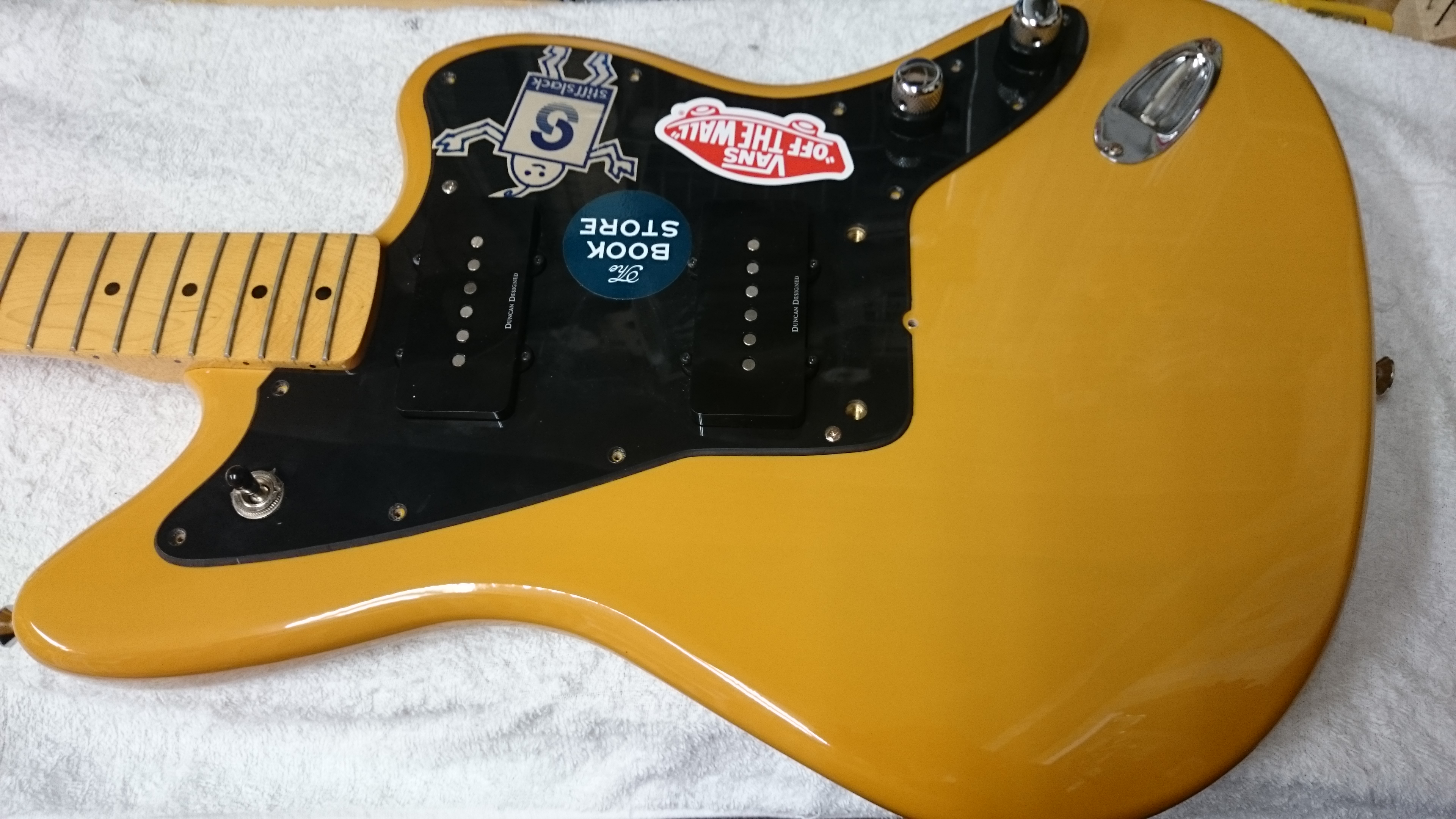
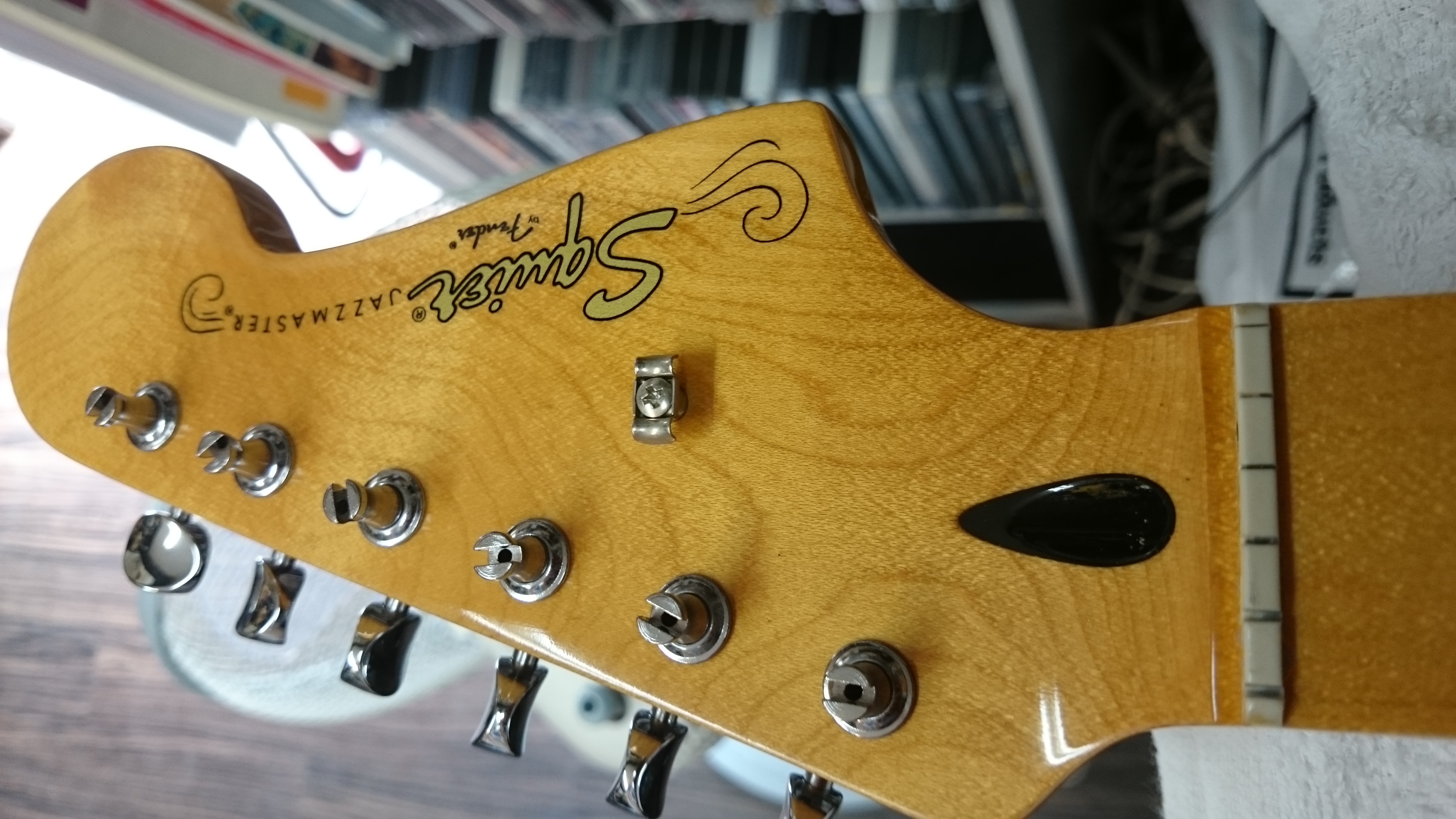
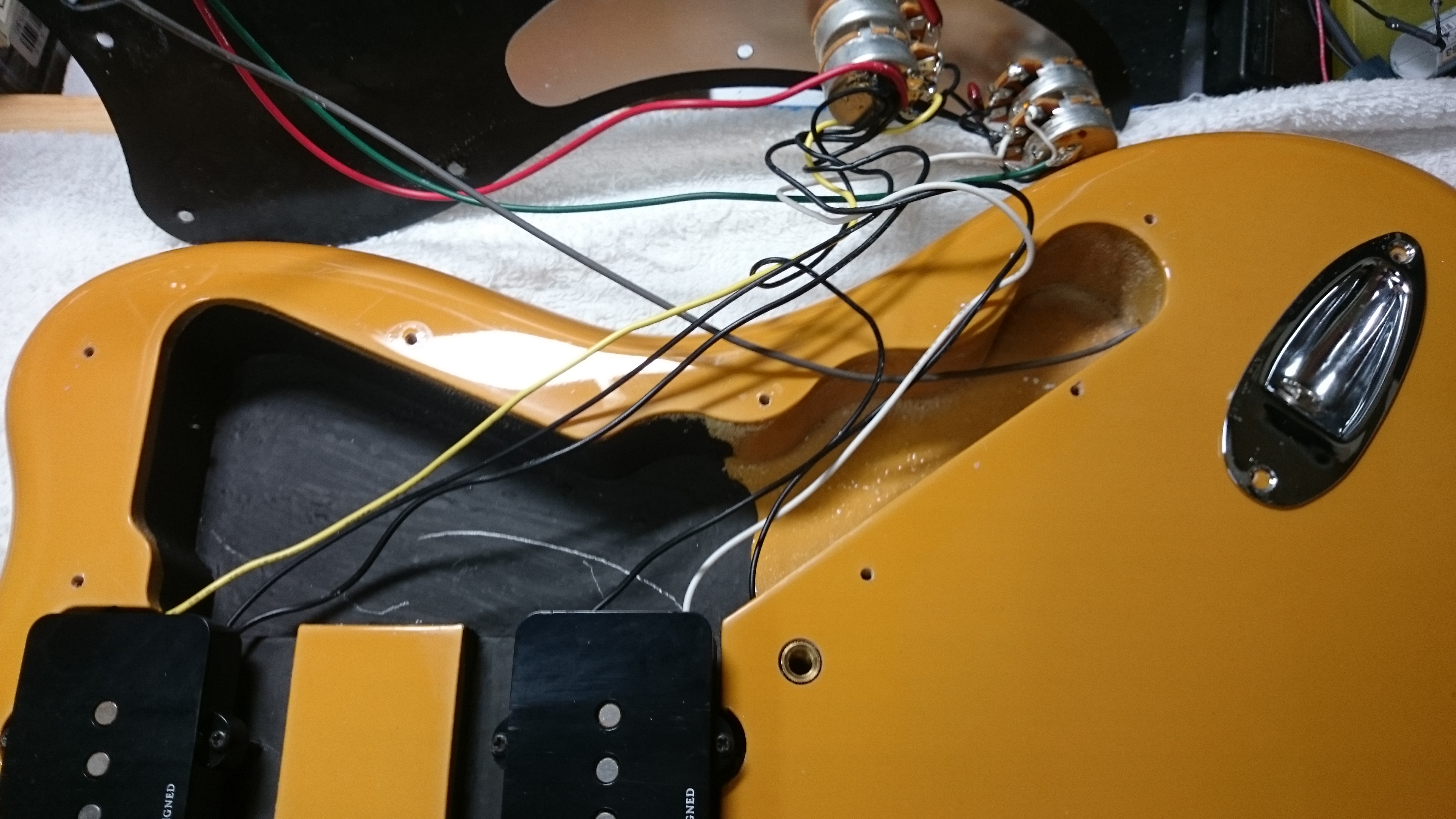
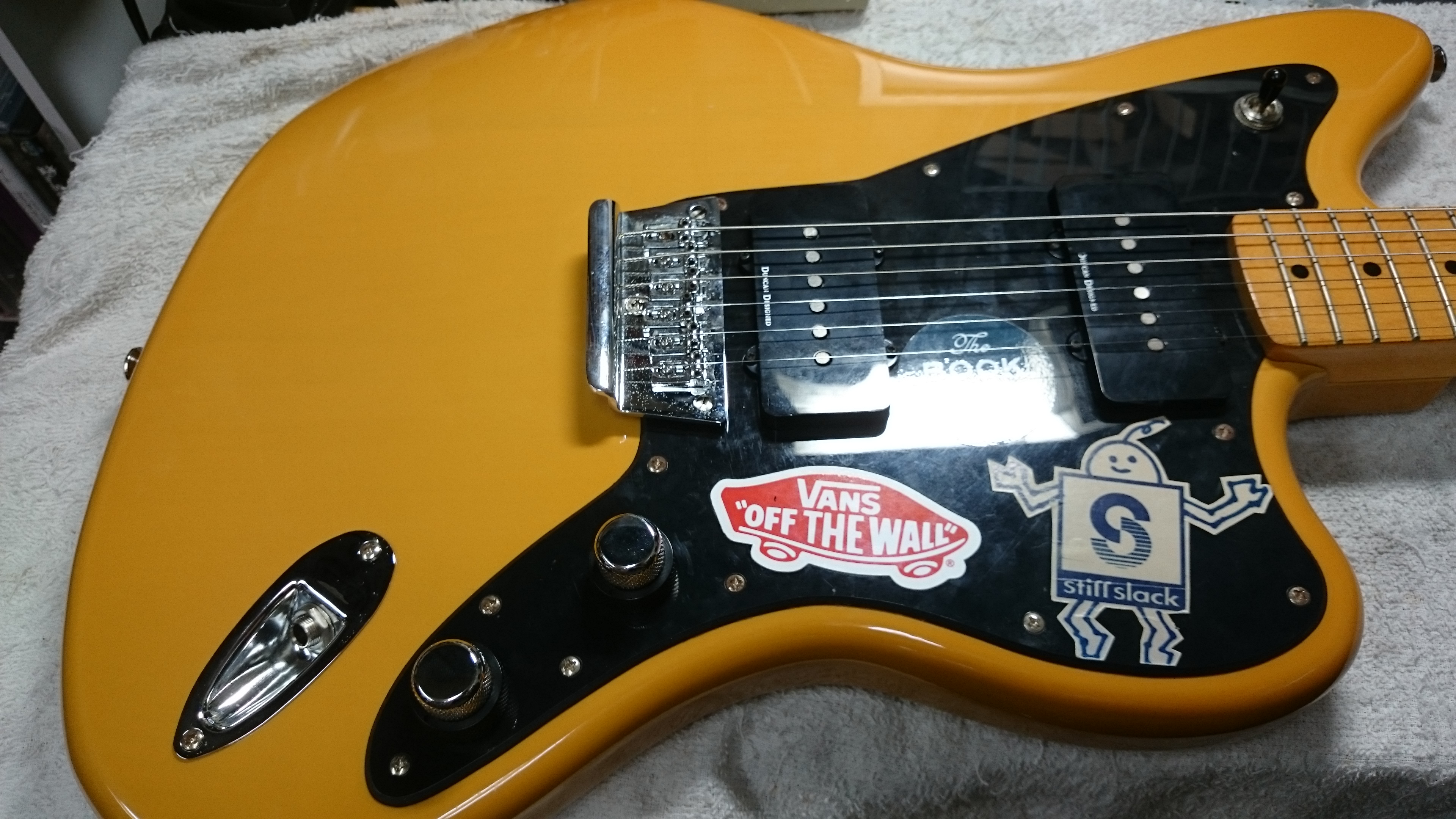
This is a string peg replacement for a Squier Cyclone.
I replaced the pegs with GOTOH ones.
After the replacement, when I played it, the sound projection from the front pickup seemed to have changed (it sounded harder).
Perhaps because GOTOH uses harder metal, the tone seems to lean more toward the high frequencies, so if the owner says so, I’m sure they’re right.
With locking tuners and similar types, the locking mechanism may reduce the force with which string vibrations are transmitted to the neck, often resulting in a similar shift toward the high frequencies (though in this case, the low frequencies are reduced).
It had significant forward bow and high string action, making it quite difficult to play.
By adjusting the truss rod and correcting the neck bow, I was able to achieve a playable state.
The pickup positions offer quite distinct characters: the front pickup is clean, while the rear pickup is powerful and suited for distortion.
Surprisingly, the rear pickup distorts quite heavily, so I think the front pickup is the only one that can produce the clean tone you’d expect from its appearance.
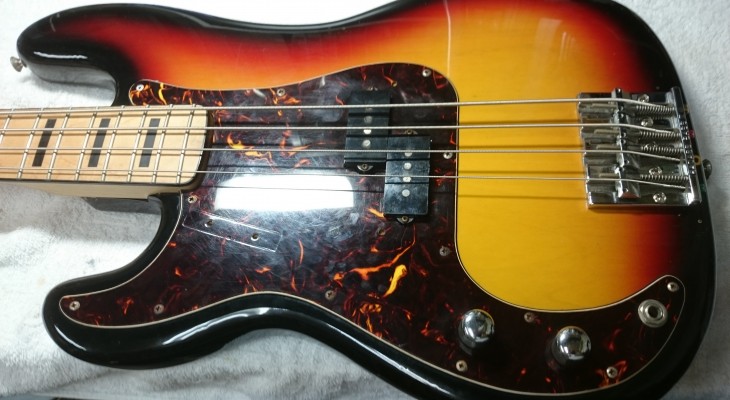
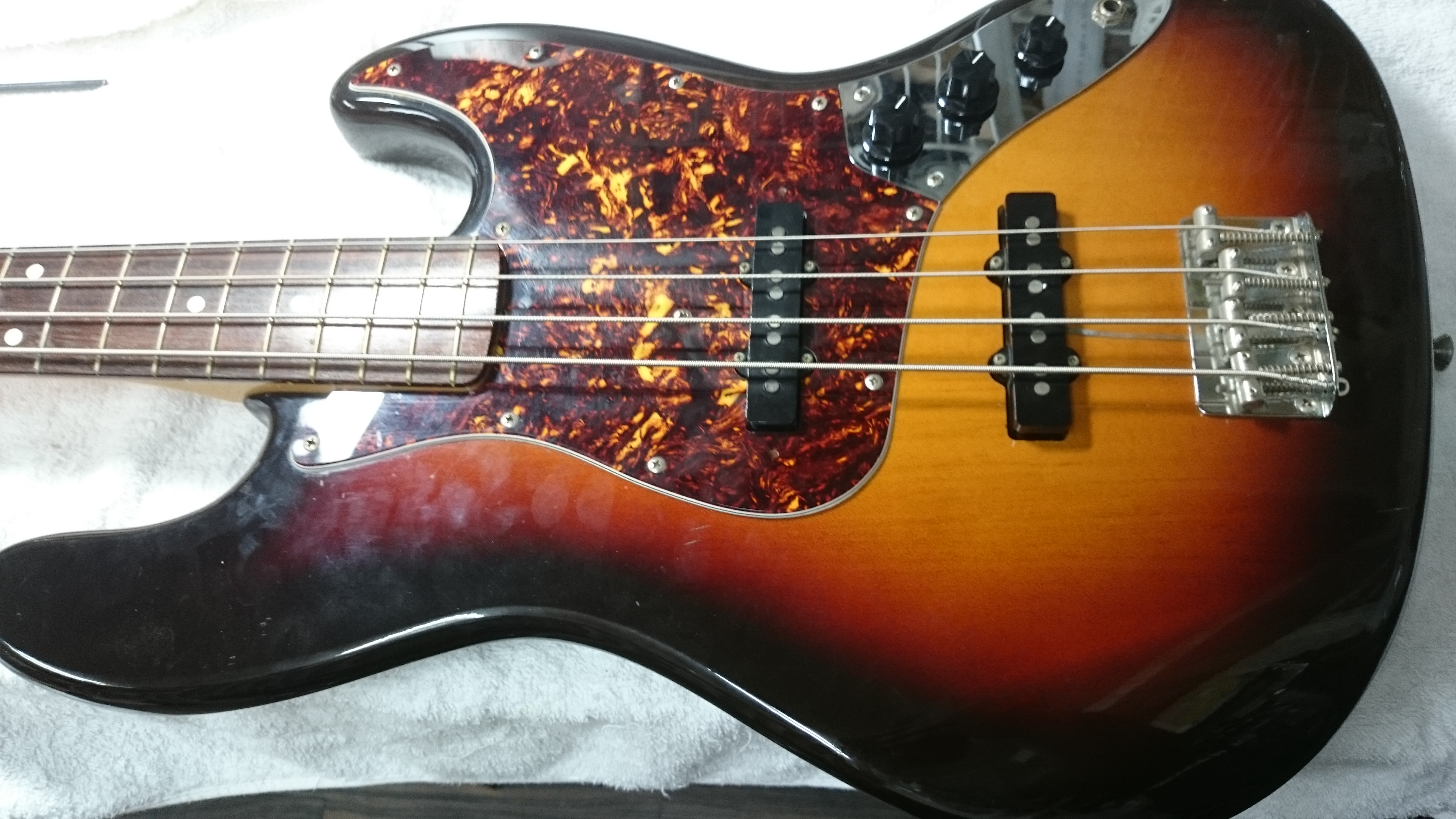
This is a setup for a Squier Classic Vibe 60 Precision Bass.
It was purchased new, but from the start, there was little slack in the truss rod.
Adjustments brought the truss rod to its limit.
Due to the weaker strength of modern wood, the truss rod is already set to a higher tension from the start, resulting in less initial slack.
When brand-new and freshly assembled, the neck is almost straight with 100% truss rod slack, but once strings are installed, it naturally bends forward.
This is a normal condition.
However, if the wood of the neck itself is weak, what happens? As expected, it bends forward significantly.
If it bends significantly, adjusting the truss rod by turning it extensively is necessary to correct the bend.
For this reason, new instruments are often sold with the truss rod already turned extensively from the start.
In other words, since the strength of wood has weakened in recent years, the solution would be to use reinforcing materials during production, but few manufacturers have implemented this.
Additionally, as expected from this state, due to the weak strength, the neck will continue to bend forward over time as strings are played.
Initial adjustment bow (over-tightened) + continued use bowing = limited truss rod adjustment range.
In recent years, it has become more common to see new instruments with almost no truss rod adjustment range or at their limit, and this is the simple reason why.
As you can see, someone with proper knowledge would naturally wonder, “Will this instrument last long?” and it is correct to say that such instruments have little chance of lasting long, even though I cannot predict the future.
It’s a shame because it sounds good and is easy to play.
To avoid purchasing such instruments, always ask the music store to check the “truss rod clearance” when purchasing.
This should be a standard procedure that music stores perform during inspection.
If they genuinely want to provide customers with good instruments, it should be a given.
However, in reality, they don’t do it.
Additionally, you must also check the effectiveness of the truss rod.
Even if there is ample truss rod adjustment, if it doesn’t work properly due to a malfunction, it’s meaningless.
Ideally, someone with knowledge should actually turn it themselves and judge the adjustment and effectiveness.
I hope this article reaches music stores.
Sell with consideration for the customer as a matter of course. Think about how you would feel if you were handed an instrument in this condition.
If you have the knowledge to indicate the amount of truss rod travel on used instruments, do the same for new ones.
It’s fine to sell instruments as “outlet items” at a discount due to reasons like insufficient truss rod travel, but clearly state the reason for the discount. If you don’t provide a reason, label them as “junk items” instead of “outlet items.”
If the instrument is in poor condition from the start, don’t sell it—return it to the manufacturer.
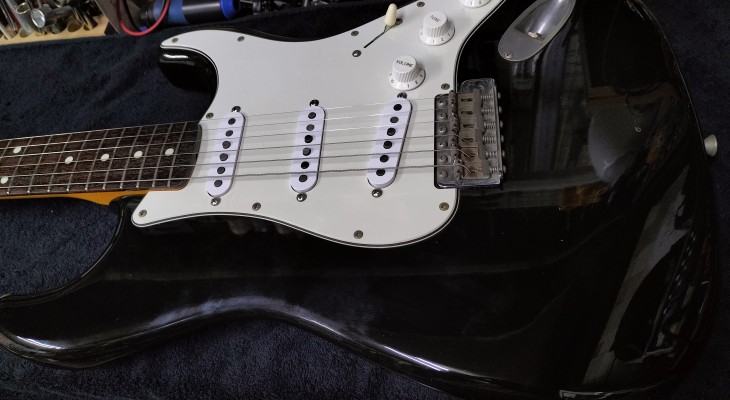
This is a Squier Classic Vibe ’60 Stratocaster setup as featured on Youtube.
It is brand new, made in 2025.
There were no problems with this one, especially in the initial state, and the initial state of adjustment was better than other makers.
There is enough truss rod left over and it is in good condition.
After adjustment, it was easy to play and the sound was amazingly good.
It is a 60,000 yen model, but in terms of sound, I think it is not much different from higher-priced models.
The nut height is low, making it easy to play, and the fret side treatment is also very well done, even in the low price range.
The sound quality is also good, which is highly recommended in the low price range.
For more details, please refer to the video on Youtube.
It was brought in because the sound sometimes did not come out.
We took this opportunity to replace all the electrical parts with new ones.
We also replaced the front PU with a DiMaggio one, which was brought in by the customer.
When buying used equipment or if the electrical components have been modified in a strange way, there is a possibility that problems may occur while using the equipment.
When buying a used product or if you are not confident about the condition of the product, it is safe to replace all the parts with new ones.
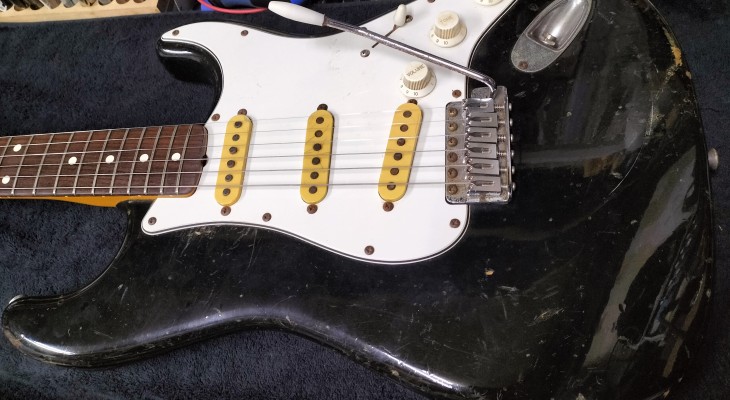
This is a Squier Stratocaster nut groove cut adjustment and setup.
It is an old Japanese E serial. There were many good ones in the low price range at that time.
The truss rod is not very good, but considering the age, it is in good condition.
The nut is transplanted from another nut? The nut was transplanted from another nut, or perhaps it was a type with a radius in the groove, but it did not fit at all, so it was modified and reattached.
There is a part where the sound clogs up when choking, and if the R is too tight, the sound will clog up when choking, but the high position frets are not in good condition.
It is better to grind them together.
The PU has been replaced with a Prevola 1967, so the sound is good and the halftone is good. The rear has good power and is easy to use.
This is a nut replacement for an old Japanese vintage, JV serial Stratocaster made by Squier.
The nut is worn out and the open strings are jammed, forcing the guitar to be used in forward warp.
The fret wear was very severe, but the sound was not clogged, so we decided to hold off on the consultation.
We were able to replace the nut and adjust the instrument to a problem-free state.
Nuts and frets are very important parts of an instrument.
If there is a problem with this part, the performance of the instrument will be considerably degraded.