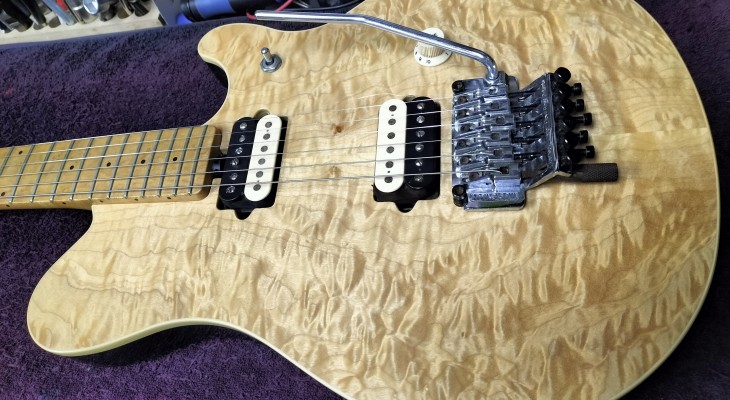
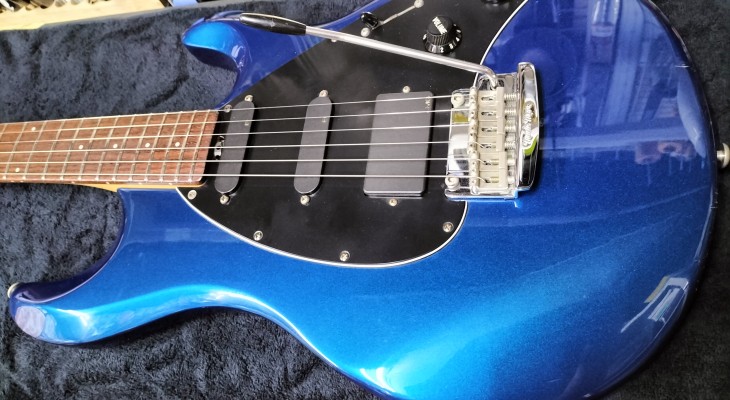
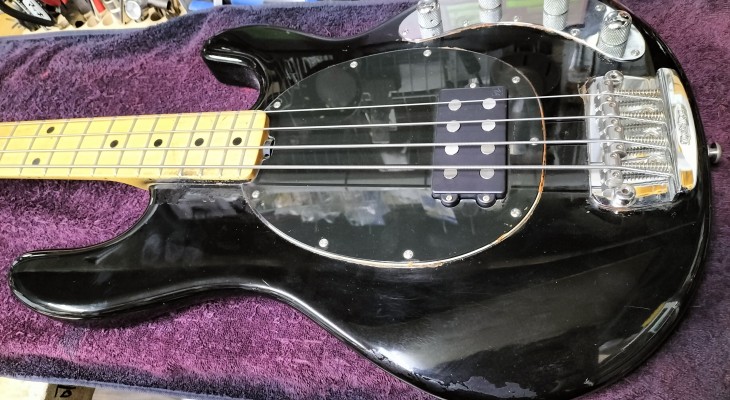
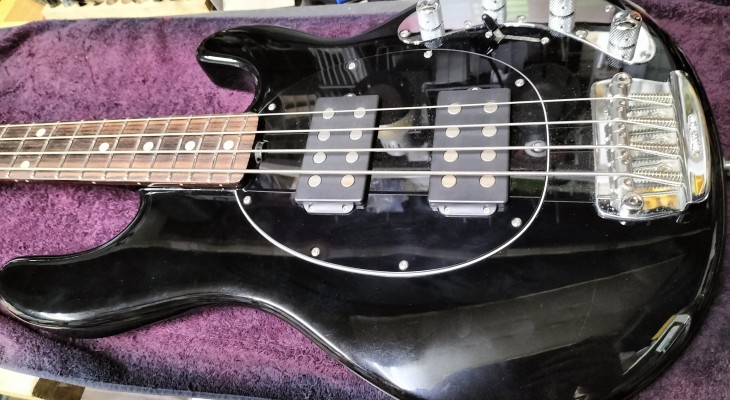
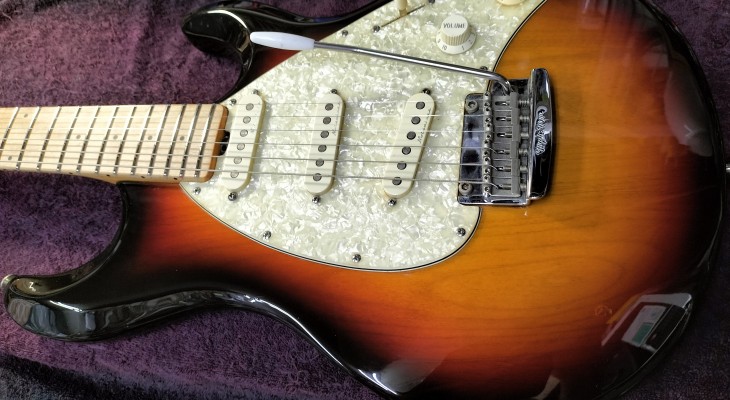
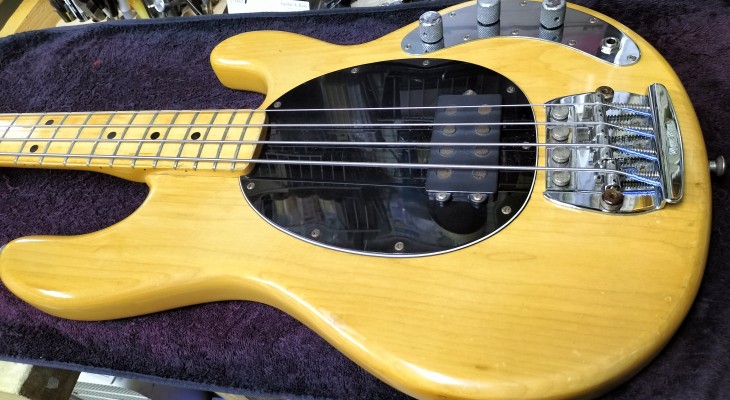
This is a Musicman AXIS jack replacement and setup.
It is an older model but in good condition as it has not been played much.
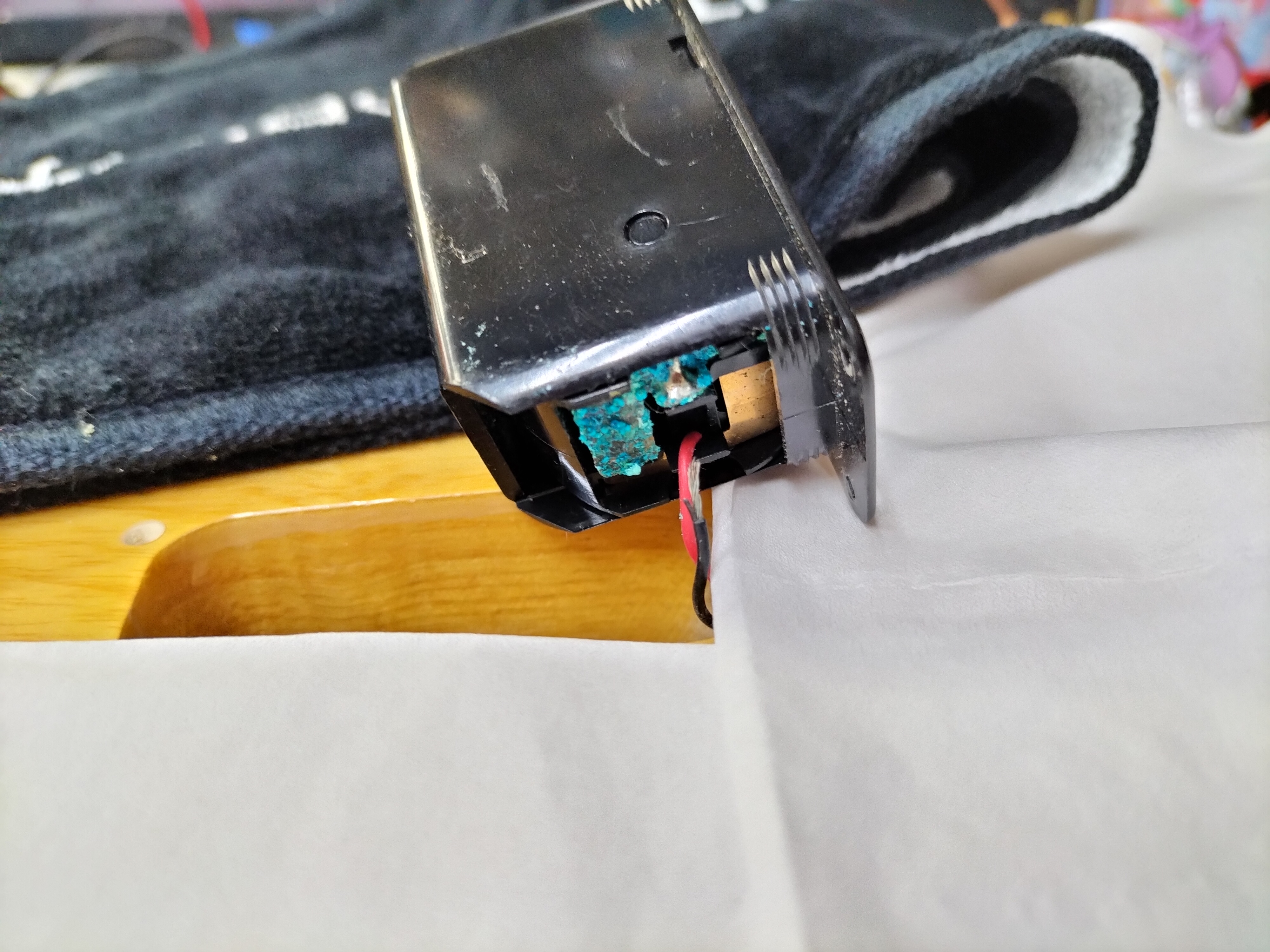
The jack was worn out, so it was replaced with a new one and set up to make it easier to play.
Many Musicman models are easy to understand and make you think “the old days were good,” and many of the old models are very good, completely different from today’s current models.
Bird’s eye maple necks are also very rigid, and I have the impression that even older models have less warpage and more truss rod left over than other makers.
It may be that good wood (high-strength wood) is hard to find in recent years, but the last few years have been so abnormal that we can no longer casually buy new ones.
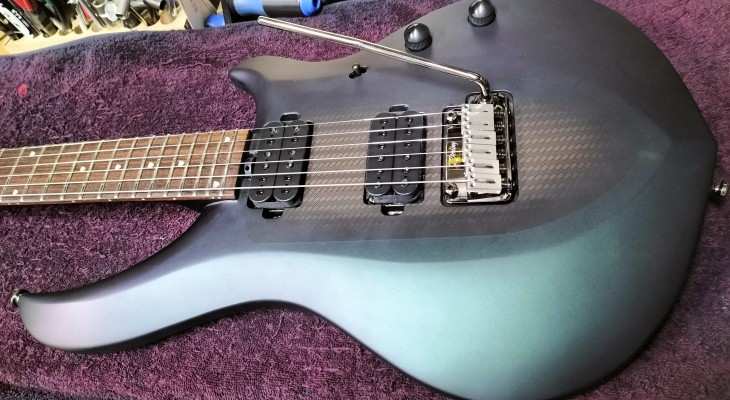
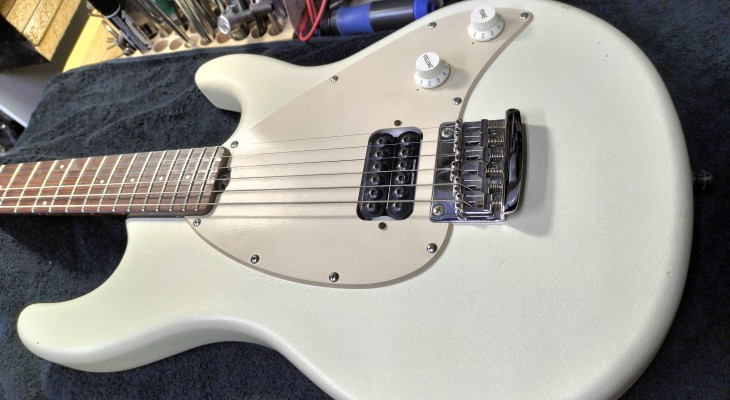
This is a fret grind and nut groove cut adjustment for a Stalin MAJ100. It is a roasted maple spec.
I believe it was purchased new, but it is in very poor condition.
I was surprised at the accuracy, like an old guitar costing 20,000 to 30,000 yen.
I can’t believe it was sold in this condition.
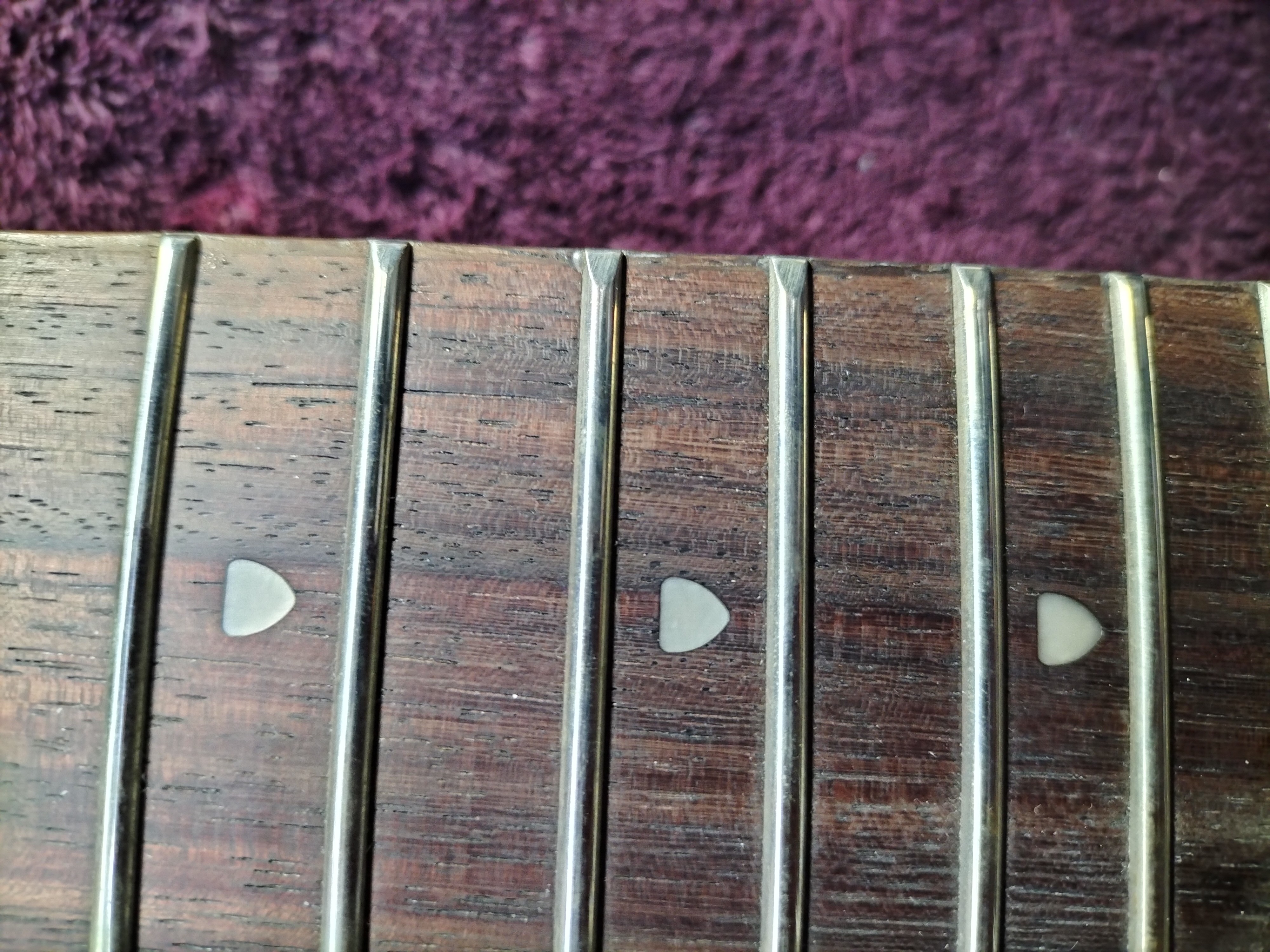
The end of the first string from the 15th to 19th fret has an extreme shaved slant angle, which makes it easy for the first string to fall off in this area.
This is troublesome because this overshaved inclination angle is close to the line where the first string passes through.
And in this case, to fix it by mortise and tenon, it is necessary to shave more than necessary to reset the inclination angle.
If the fretboard is so badly shaved, we would normally replace the fretboard.
After consulting with the customer, we decided not to shave more than necessary until the tilt angle was reset, but to fix the overall bad condition.
The neck is very soft, and the truss rod is used to adjust it, so it may not last long enough to continue to use.
The neck is very soft, and we have to use a truss rod to adjust it, so it may not last long.
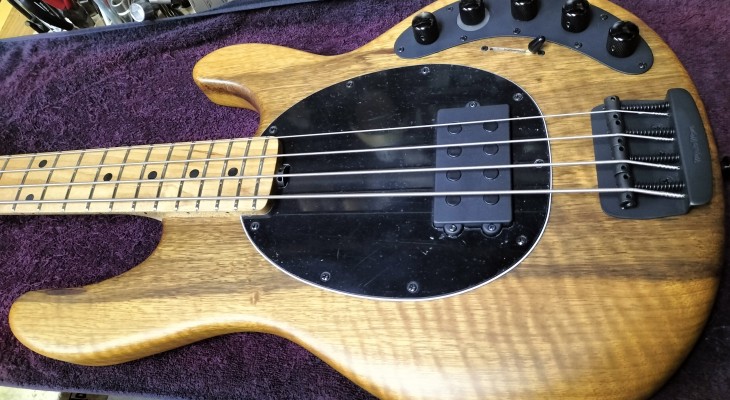
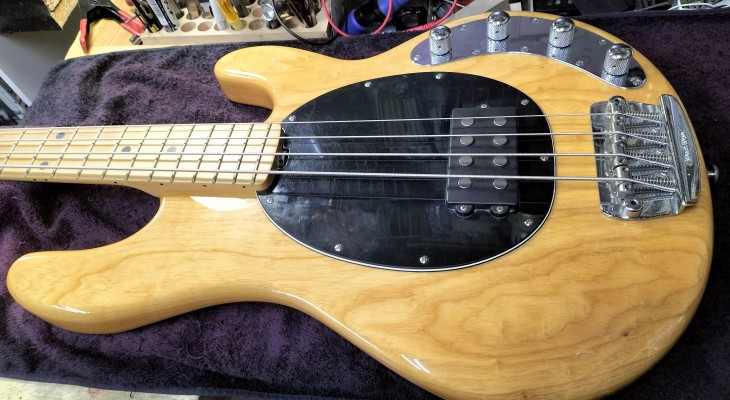
This is a Music Man dark ray fretted mortise and tenon. This model has a lowered maple neck.
It is in good condition with a chattering sound throughout.
I think this is the latest model of Stingray. It is equipped with a distortion circuit and can distort the sound with just the body.
I believe it was purchased new, but the truss rod is at the limit from the beginning and the neck is very soft.
The truss rod is completely loosened and the neck is almost straight.
The neck is not warped in any significant way, so it is not that there is no room for the truss rod due to the neck’s original forward warp.
The neck is not strong (the wood is soft), so when the strings are put on, the neck will warp significantly.
The only adjustment that needs to be made is to use the entire truss rod.
As you can see, if you have been following my blog or YouTube for a long time, you know what I mean.
Since it is a bass, the tension is very strong, and I don’t know if it will be okay in this condition for continued use in the future, but it probably won’t last long.
If the neck is warped even a little bit, it cannot be adjusted, and the wood is not strong enough to withstand the tension of the bass strings for a long time.
I loosened the truss rod and found that there is a general warp, so I think that the neck is not accurate from the beginning or the neck strength is weak, so the neck is abnormal at an early stage.
I fixed it by rubbing the frets together to take away the undulation.
After the fret line was repaired, it is certain that the neck material is soft, and there is no doubt in my judgment that the neck warps greatly when the strings are stretched.
The truss rod is still at its limit just by adjusting it because of the large forward warp when the strings are stretched.
Even in this situation, uneducated repairmen will probably say, “Just leave the strings on,” but I think it’s time for them to change their ignorant statements.
Do these people want to profit themselves by tricking people who are that ignorant into breaking them and replacing them? That’s all I can think of.
If I were a distributor or a music shop, I would return instruments in this condition to the manufacturer.
Because they are sold without proper inspection, the instruments in this condition are passed on to the customers, and they cry.
Are the sellers really unaware of this situation? No, they should know.
If they know, they should fix the situation, and if they don’t, that is also a problem.
The quality of the products and services they offer is declining because they are only thinking about making money.
I have been sending out information through blogs and YouTube for a long time, but the number of people affected is increasing every year because it is not spreading.
Please, listeners, who do you get your information from? Whose information should be spread? Who do you get your information from?
Please spread the information of people who are doing their jobs properly.
Please have your clients check out the following videos before purchasing.
If the seller refuses to do this kind of work, do not buy from them.
If the seller refuses to do this work, do not buy from them.
If they are inspecting the goods, you should be able to get specific information about the condition of the goods, but there are few places that actually do this, so there are few places that can explain it even if you ask.
If they are inspecting the product, it would be a different story if you find a defect later, so it would be your right to have it taken care of.
If you buy a product, have it checked by some other place for adjustments, etc.