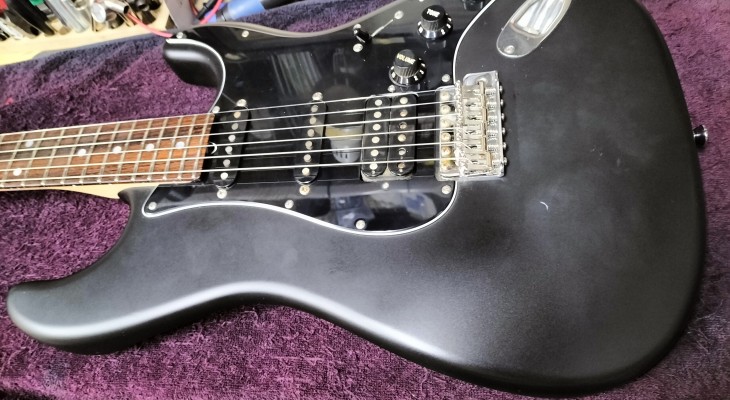
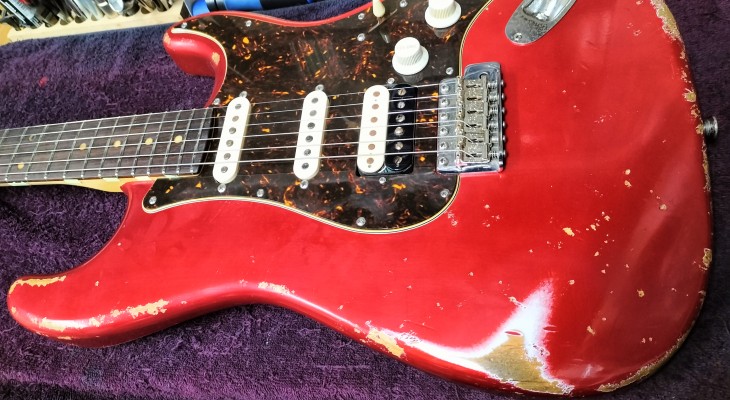
The overall wear is quite severe. The saddle was replaced with a GOTOH one due to severe rust.
The frets have been fretted and all the problems have been fixed.
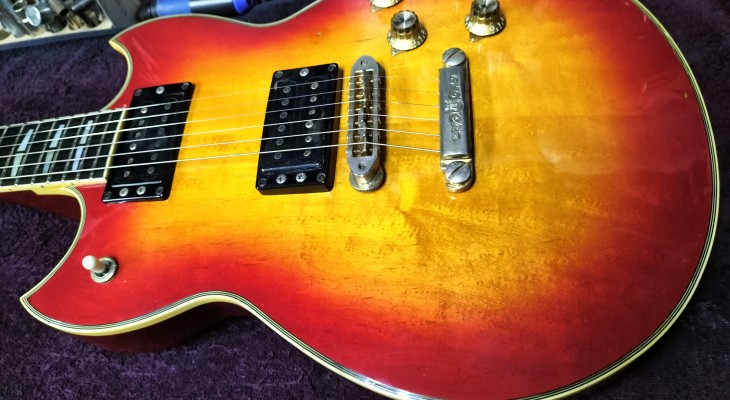
The sound is tight and sounds like it was made in Japan, and the construction appears to be Suhr-like.
It is important to take good care of your instrument and use it for a long time because it tends to sound better when it has been played a lot, but there will be wear and tear that needs to be repaired.
If you neglect these things, you will end up playing the instrument in a bad condition, and you will have trouble playing something that is in the correct condition.
A typical example of this is “the left hand is pressed too hard.
If it is easy to play, you will not generate unnecessary force and your playing will be more efficient.
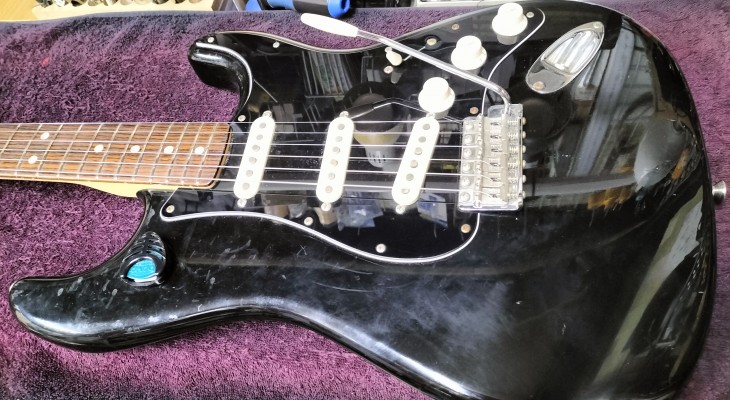
This is a Fender Custom Shop Stratocaster fret grinder.
It is a 70’s spec model.
If the frets are worn out, no matter how much you adjust them, the clogging will not disappear.
The frets were worn out and the fret jamming was eliminated, making the guitar easy to play.
The ’70s version has a bolt adjustment from the joint plate to adjust the neck angle, which allows for fine angle adjustment not possible with shim adjustment.
However, many people say that shims are better in terms of sound because of the larger gap.
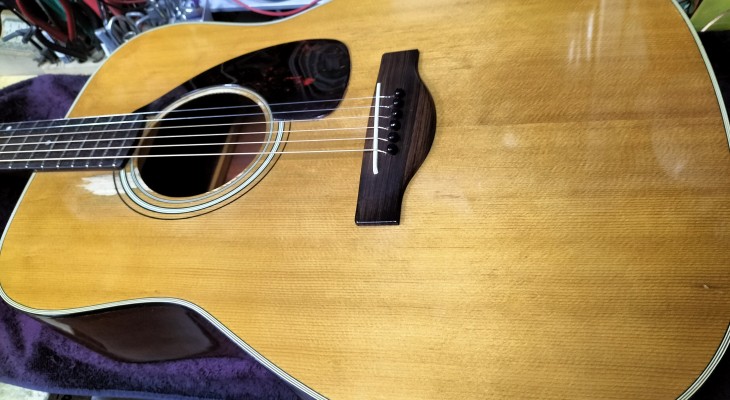
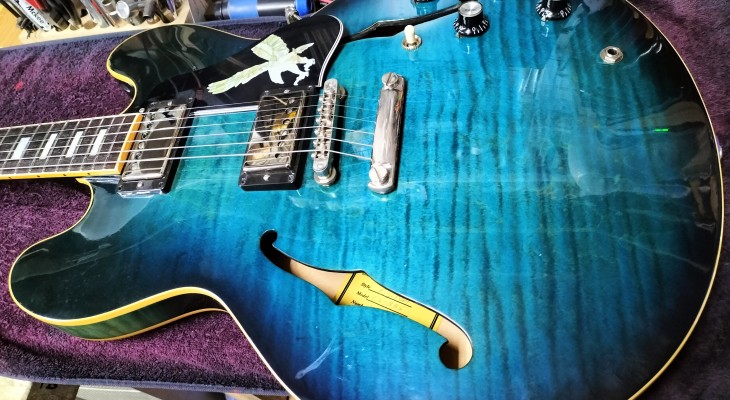
This is a Yamaha FG-180 fret grind and nut groove cut adjustment.
It is an old model, but the frets had been replaced in the past, and the condition seemed to have improved.
We were able to finish the guitar by matching the frets and cutting the high nut to make it easier to play.
The Yamaha FG series has a lot of good sound quality at a low price point, but the ones you can find used in recent years are all in poor condition, so you would be lucky to get a very usable one.
The basic condition of the FG series is at the limit of the truss rod, and most of them are not usable because of the large forward warp, top lift, and high string height.
In this sense, it is valuable to have them in usable condition.
In the old days, many of the low-priced ones were priced at several tens of thousands of yen, which is about the same as today’s 200,000-300,000 yen.
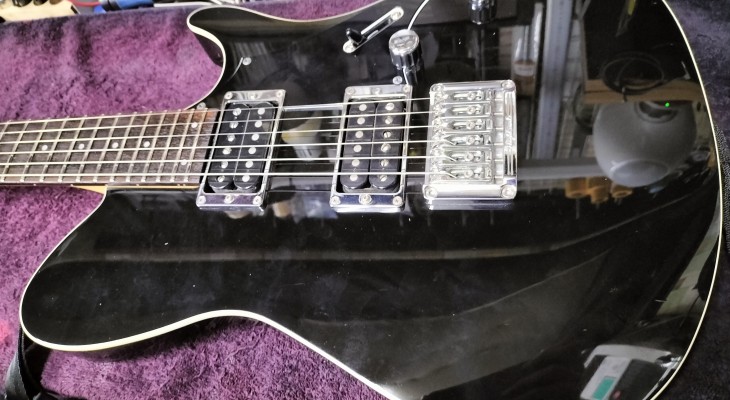
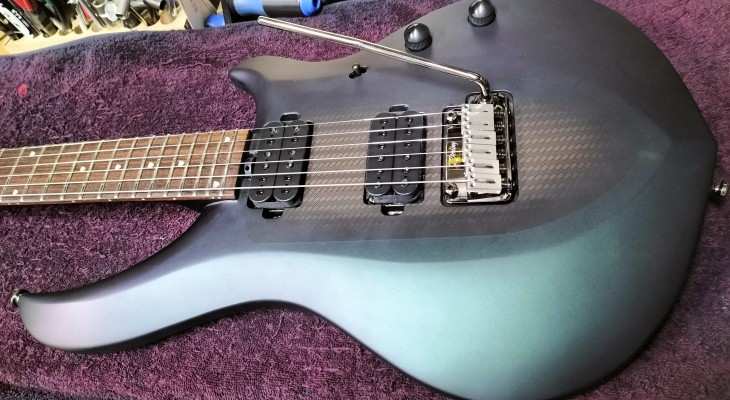
This is a fret grind and nut groove cut adjustment for a Stalin MAJ100. It is a roasted maple spec.
I believe it was purchased new, but it is in very poor condition.
I was surprised at the accuracy, like an old guitar costing 20,000 to 30,000 yen.
I can’t believe it was sold in this condition.
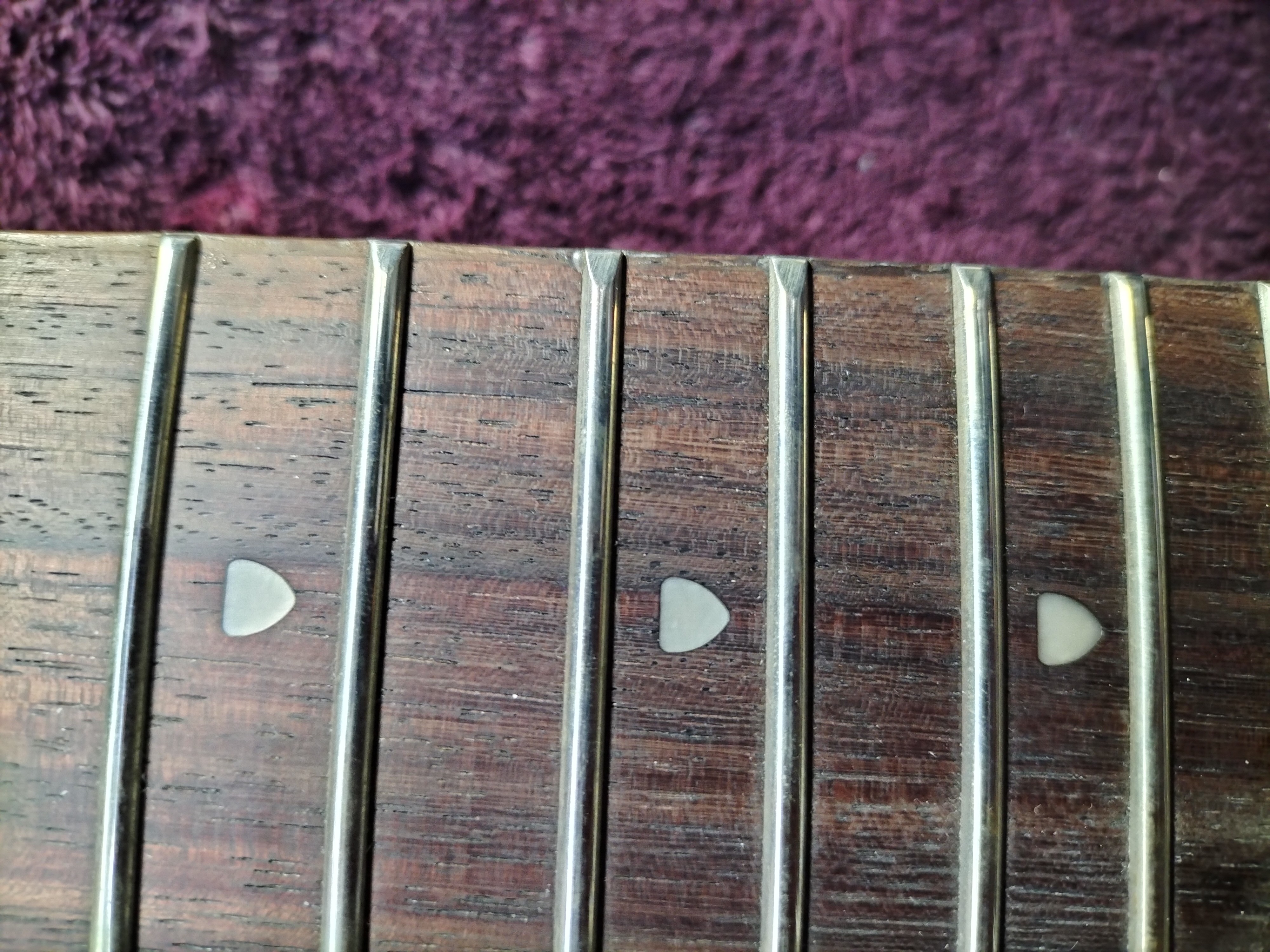
The end of the first string from the 15th to 19th fret has an extreme shaved slant angle, which makes it easy for the first string to fall off in this area.
This is troublesome because this overshaved inclination angle is close to the line where the first string passes through.
And in this case, to fix it by mortise and tenon, it is necessary to shave more than necessary to reset the inclination angle.
If the fretboard is so badly shaved, we would normally replace the fretboard.
After consulting with the customer, we decided not to shave more than necessary until the tilt angle was reset, but to fix the overall bad condition.
The neck is very soft, and the truss rod is used to adjust it, so it may not last long enough to continue to use.
The neck is very soft, and we have to use a truss rod to adjust it, so it may not last long.
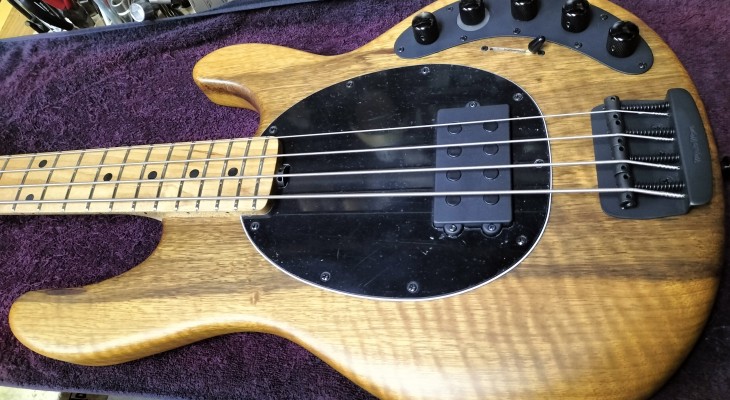
This is a Music Man dark ray fretted mortise and tenon. This model has a lowered maple neck.
It is in good condition with a chattering sound throughout.
I think this is the latest model of Stingray. It is equipped with a distortion circuit and can distort the sound with just the body.
I believe it was purchased new, but the truss rod is at the limit from the beginning and the neck is very soft.
The truss rod is completely loosened and the neck is almost straight.
The neck is not warped in any significant way, so it is not that there is no room for the truss rod due to the neck’s original forward warp.
The neck is not strong (the wood is soft), so when the strings are put on, the neck will warp significantly.
The only adjustment that needs to be made is to use the entire truss rod.
As you can see, if you have been following my blog or YouTube for a long time, you know what I mean.
Since it is a bass, the tension is very strong, and I don’t know if it will be okay in this condition for continued use in the future, but it probably won’t last long.
If the neck is warped even a little bit, it cannot be adjusted, and the wood is not strong enough to withstand the tension of the bass strings for a long time.
I loosened the truss rod and found that there is a general warp, so I think that the neck is not accurate from the beginning or the neck strength is weak, so the neck is abnormal at an early stage.
I fixed it by rubbing the frets together to take away the undulation.
After the fret line was repaired, it is certain that the neck material is soft, and there is no doubt in my judgment that the neck warps greatly when the strings are stretched.
The truss rod is still at its limit just by adjusting it because of the large forward warp when the strings are stretched.
Even in this situation, uneducated repairmen will probably say, “Just leave the strings on,” but I think it’s time for them to change their ignorant statements.
Do these people want to profit themselves by tricking people who are that ignorant into breaking them and replacing them? That’s all I can think of.
If I were a distributor or a music shop, I would return instruments in this condition to the manufacturer.
Because they are sold without proper inspection, the instruments in this condition are passed on to the customers, and they cry.
Are the sellers really unaware of this situation? No, they should know.
If they know, they should fix the situation, and if they don’t, that is also a problem.
The quality of the products and services they offer is declining because they are only thinking about making money.
I have been sending out information through blogs and YouTube for a long time, but the number of people affected is increasing every year because it is not spreading.
Please, listeners, who do you get your information from? Whose information should be spread? Who do you get your information from?
Please spread the information of people who are doing their jobs properly.
Please have your clients check out the following videos before purchasing.
If the seller refuses to do this kind of work, do not buy from them.
If the seller refuses to do this work, do not buy from them.
If they are inspecting the goods, you should be able to get specific information about the condition of the goods, but there are few places that actually do this, so there are few places that can explain it even if you ask.
If they are inspecting the product, it would be a different story if you find a defect later, so it would be your right to have it taken care of.
If you buy a product, have it checked by some other place for adjustments, etc.
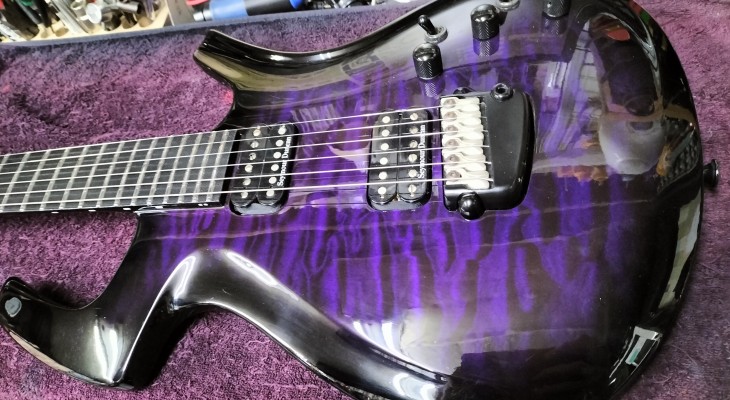
Overall, there is some fret lift, and most of the frets are fretted by hand.
The Parker has no fret grooves, and only the fret grooves are glued on the fretboard.
Of course, the glue is not perfect. It is not a lifetime guarantee, but it has a limited life span.
It is possible for the adhesive to peel off due to some reason, and this structure itself will cause problems in the future.
Therefore, there is no problem in thinking that “buying a Parker-made product = buying a product that has a problem.
Some music shops refuse to deal with Parker-made instruments.
The fret float was fixed by re-gluing and fret matching.
We do not offer any warranty. Even if there is a problem after the work is done, we will charge you again to deal with it, even if the work has just been done.
You should understand that the guitar has such an unbelievable structure.
Also, when I checked that there was no sound, I found that the jack was disconnected, so I fixed it.
The piezo may be malfunctioning, and there are signs of amateur work, and since it has been badly tampered with, the piezo itself is damaged, plus the original wiring condition is unknown, so it cannot be fixed.
If you buy a used one and it has been tampered with badly, important parts may be broken.
Parker cannot replace the PU, so if it is broken badly, it will be in a helpless state, so please be careful.
If the PU is broken, it may be possible to take out the PU and make it into an escutcheon, but why it is made in this way is a mystery.
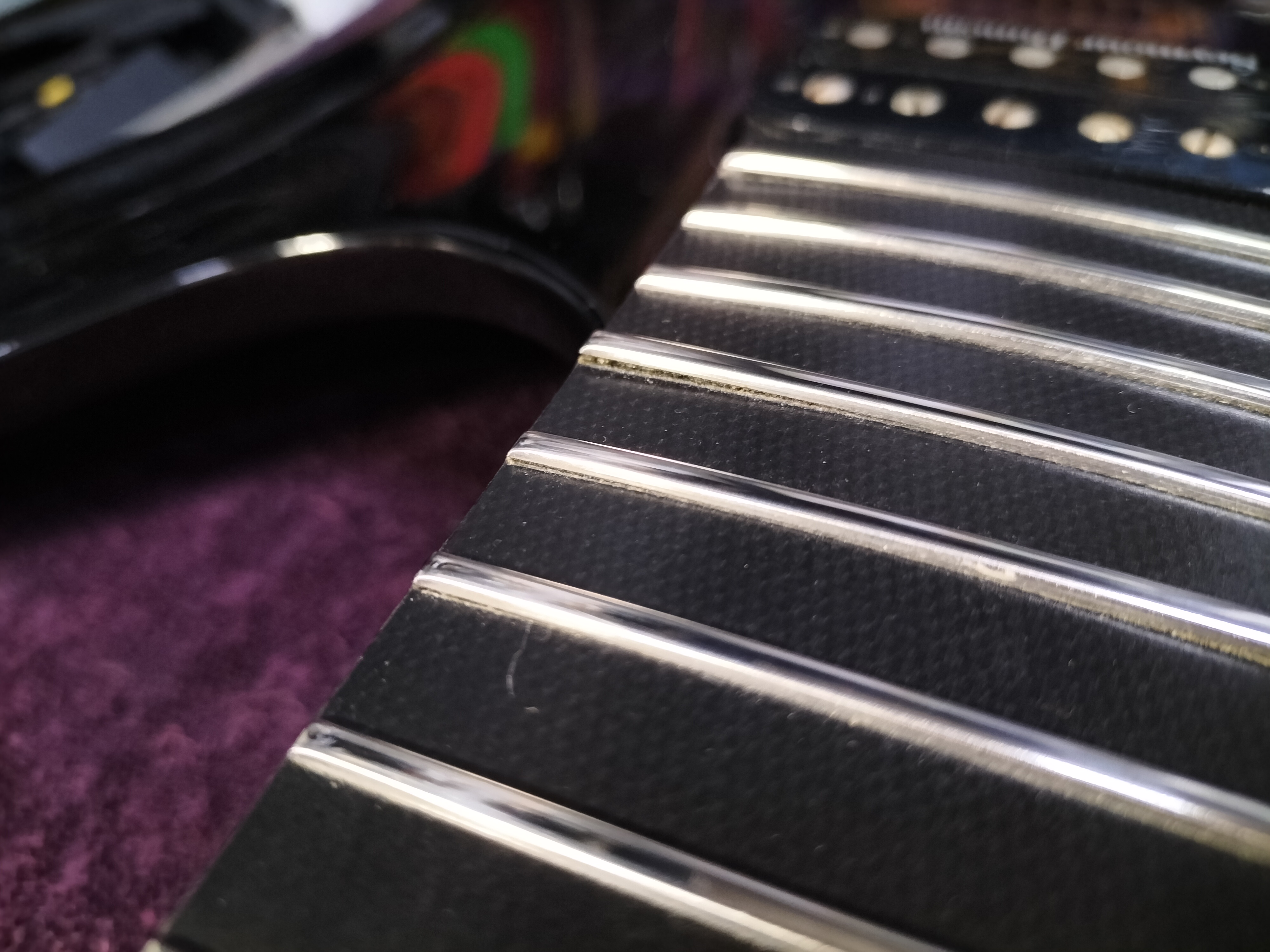
The fret condition is poor due to wear and tear, making it difficult to use.
Many people may not mind using the guitar in this condition, but if there is a clogged fret, the guitar will not sound properly in some positions, and the resonance of chords will deteriorate.
The clogged fretboard is like a muted sound, and in the case of guitars, people around you will notice it.
The frets have been worn out and the guitar is now in good condition.
The frets, especially on Gibson guitars, are often poorly finished and trapezoidal on the top surface, so rounding them off nicely will improve the pitch feel very much.
To be honest, the original condition is not good, so it is definitely better to use a new one with the top surface of the frets nicely rounded by rubbing it together.
This is a fret grinder for a Fullerton Stratocaster.
The frets are clogged due to wear and tear.
Also, the string height adjustment was done by inserting a piece of paper between the 6 string saddle’s imo screws because they are stuck due to rust and cannot be adjusted. This one needs to be replaced.
The phase of the rear PU seems to be reversed due to amateur modification, and the halftone with the center is not correct.
We were able to finish it up without any problem in playing by aligning them.
Many used instruments have rattles in various parts, and the seller is often an amateur and does not provide detailed information.
If you don’t think about fixing all the problems, you may end up with a guitar that is not in good shape.